
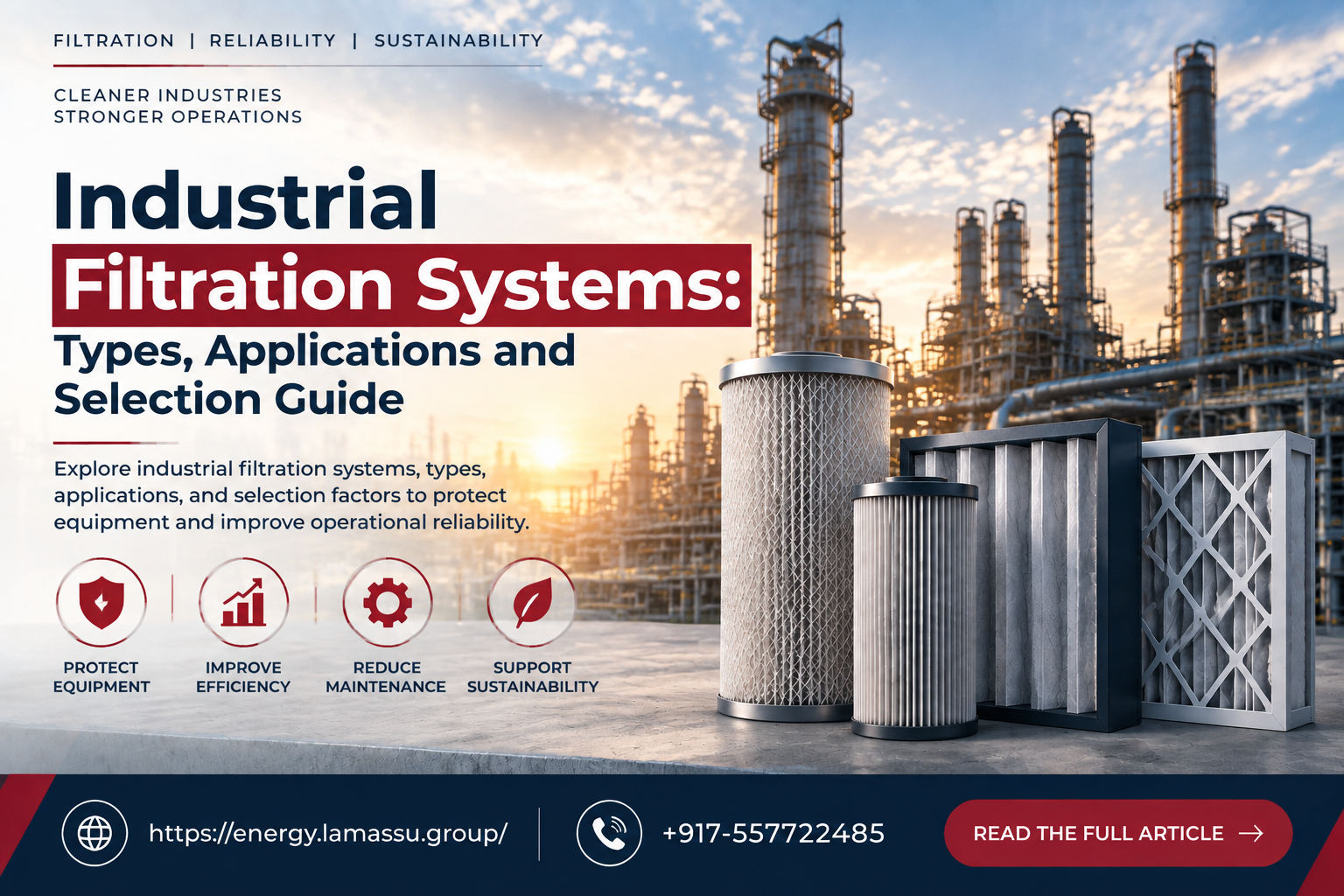
Learn how industrial filtration systems protect equipment, improve efficiency, and support reliable operations across different industries.
What Are Industrial Filtration Systems?
Industrial Filtration Systems are designed to remove unwanted particles, contaminants, and impurities from air, gas, or liquid streams to protect industrial equipment and maintain efficient operations.
In industrial environments, contaminants such as dust, dirt, oil particles, moisture, and other unwanted materials can negatively affect machinery performance and increase operational risks. Without proper filtration, these contaminants may enter critical systems and contribute to equipment wear, reduced efficiency, and unexpected maintenance requirements.
The main purpose of Industrial Filtration Systems is to control contamination before it affects important equipment and processes. These systems are widely used in power generation, oil and gas, manufacturing, chemical processing, and other industries where equipment reliability is essential.
A well-designed filtration system helps facilities maintain cleaner operating conditions by removing harmful particles and supporting consistent equipment performance.
Why Are Industrial Filtration Systems Important?
Industrial equipment often operates under demanding conditions where even small amounts of contamination can create long-term problems. Components such as turbines, compressors, pumps, hydraulic systems, and production equipment require controlled operating environments to maintain reliability.
Effective Industrial Filtration Solutions help organizations:
- Protect critical equipment from contamination.
- Reduce component wear.
- Improve operational reliability.
- Maintain consistent performance.
- Reduce unexpected maintenance activities.
- Extend equipment service life.
Filtration is not only about removing visible particles. Many industrial contaminants are microscopic and can gradually affect equipment performance without creating immediate signs of failure.
By controlling contamination at an early stage, facilities can reduce the risk of performance degradation and improve overall operational stability.
How Industrial Filtration Systems Work
The basic function of an industrial filtration system is to separate unwanted contaminants from a fluid or airflow while allowing the required medium to continue through the process.
The filtration process generally follows these stages:
Contaminated Air, Gas, or Liquid
↓
Filtration Stage
↓
Removal of Unwanted Particles
↓
Cleaner Medium
↓
Protected Equipment or Process
The filtration method depends on the type of contaminant, the application requirements, and the level of protection needed.
For example, air filtration systems may focus on removing dust and airborne particles, while liquid filtration systems may target oil contamination, debris, or process impurities.
Choosing the correct filtration approach is important because excessive restriction or unsuitable filtration performance can affect system efficiency.
Types of Industrial Filtration Systems
Different industries require different filtration technologies depending on operating conditions and equipment requirements.
The main categories include:
- Industrial Air Filtration Systems.
- Liquid Filtration Systems.
- Gas Filtration Systems.
- Process Filtration Systems.
- Hydraulic and Lubrication Filtration Systems.
Each type is designed to address specific contamination challenges and protect different types of industrial equipment.
Industrial Air Filtration Systems
Industrial Air Filtration Systems are used to remove airborne contaminants before they enter equipment or industrial processes.
Airborne particles may include:
- Dust.
- Sand particles.
- Smoke.
- Industrial emissions.
- Moisture droplets.
- Other environmental contaminants.
In power generation facilities, air filtration is especially important because gas turbines and other rotating equipment require clean air to maintain efficient operation.
Poor air quality can contribute to:
- Compressor fouling.
- Reduced airflow.
- Lower equipment efficiency.
- Increased maintenance requirements.
For gas turbine applications, effective air intake filtration helps protect sensitive components and supports reliable operation. Facilities can learn more about this relationship through the related topic of Gas Turbine Air Intake Filters.
Liquid Filtration Systems
Liquid Filtration Systems are designed to remove contaminants from different industrial fluids, including oils, hydraulic fluids, process liquids, and cooling fluids.
Maintaining clean fluids is important because contamination can affect:
- Pumps.
- Valves.
- Bearings.
- Hydraulic systems.
- Mechanical components.
Common liquid filtration applications include:
- Lubrication systems.
- Hydraulic equipment.
- Industrial processing.
- Cooling systems.
- Fuel systems.
Effective liquid filtration helps maintain fluid quality and reduces the risk of contamination-related equipment problems.
Gas Filtration Systems
Gas Filtration Systems are used to remove unwanted particles and contaminants from gas streams before they reach sensitive equipment or industrial processes.
These systems are important in applications where gas quality can influence:
- Equipment performance.
- Process efficiency.
- Safety.
- Reliability.
Gas filtration may be required in industries such as:
- Power generation.
- Oil and gas.
- Chemical processing.
- Industrial manufacturing.
The selection of a gas filtration system depends on the type of gas, contaminants present, operating pressure, and required filtration performance.
Industrial Filter Types
Different Industrial Filter Types are available depending on the application and contamination challenges.
Cartridge Filters
Cartridge filters are commonly used where precise filtration is required.
They can provide effective removal of smaller particles and are used in many industrial applications requiring controlled filtration performance.
Bag Filters
Bag filters are often used for applications involving higher contaminant loads and larger particle removal requirements.
They are commonly found in industrial air and liquid filtration applications.
Air Intake Filters
Air intake filters are designed to protect equipment by controlling airborne contamination before it enters critical systems.
They are particularly important for gas turbines and other equipment that depends on large volumes of clean air.
Oil Filters
Oil filters help maintain lubricant cleanliness by removing particles and contaminants that may affect mechanical components.
They are important in systems where lubrication quality directly affects equipment reliability.
Hydraulic Filters
Hydraulic filters protect hydraulic systems by controlling contamination levels within hydraulic fluids.
Maintaining clean hydraulic fluid helps support stable operation and reduce component damage.
Industrial Filtration Applications
Industrial Filtration Systems are used across different industries to protect equipment, maintain process quality, and improve operational reliability. The filtration requirements vary depending on the type of industry, operating environment, and equipment sensitivity.
Some of the most common applications include:
Filtration Systems in Power Generation
Power generation facilities depend on reliable equipment operation to maintain stable electricity production. Contamination control is an important factor because turbines, generators, compressors, and auxiliary systems operate under demanding conditions.
In power plants, Industrial Filtration Solutions can support:
- Turbine air intake protection.
- Lubrication system cleanliness.
- Hydraulic system protection.
- Fuel and gas filtration.
- Equipment reliability improvement.
For gas turbines specifically, controlling airborne contamination is important because particles entering the compressor can affect airflow, efficiency, and long-term equipment condition.
This is why filtration is considered an important part of protecting critical assets and supporting reliable power generation operations.
Filtration Systems in Oil and Gas Applications
The oil and gas industry relies heavily on filtration to maintain equipment performance and process reliability.
Contaminants in fluids and gases can affect:
- Pumps.
- Compressors.
- Valves.
- Processing equipment.
- Instrumentation systems.
Gas Filtration Systems and liquid filtration solutions help control contamination levels and support safer, more efficient operations.
Because many oil and gas facilities operate continuously under demanding conditions, maintaining proper filtration performance can help reduce equipment-related interruptions.
Filtration in Manufacturing and Industrial Processes
Manufacturing facilities often use filtration systems to maintain product quality and protect production equipment.
Industrial filtration applications may include:
- Process fluids.
- Cooling systems.
- Compressed air systems.
- Hydraulic equipment.
- Production machinery.
Contamination control can help reduce equipment wear, improve process stability, and minimize unexpected production issues.
Filtration for Heavy Equipment and Machinery
Heavy industrial equipment often operates in environments where dust, particles, and contaminants are present.
Proper filtration helps protect:
- Hydraulic systems.
- Lubrication systems.
- Engines.
- Mechanical components.
Without effective filtration, contaminants can accelerate wear and increase maintenance requirements.
Industrial Filtration Systems in Hot and Dusty Environments
Environmental conditions have a significant impact on filtration requirements.
Facilities operating in regions with high temperatures, dust exposure, and industrial pollutants require filtration solutions designed for challenging conditions.
This is particularly relevant in Middle Eastern markets where desert dust, airborne particles, and high ambient temperatures can influence equipment performance.
In these environments, effective Industrial Air Filtration helps:
- Reduce contamination entering equipment.
- Protect sensitive components.
- Maintain airflow quality.
- Support equipment reliability.
- Reduce contamination-related maintenance issues.
For power generation facilities, proper filtration selection becomes especially important because gas turbines require large volumes of clean air for efficient operation.
How Industrial Filtration Systems Improve Equipment Reliability
Equipment reliability depends on controlling the factors that contribute to degradation and unexpected failures.
Contamination is one of the common factors that can negatively affect industrial equipment performance.
Effective Industrial Filtration Systems help improve reliability by:
- Removing harmful particles.
- Protecting critical components.
- Maintaining cleaner operating conditions.
- Reducing wear caused by contaminants.
- Supporting longer equipment service life.
A filtration system should therefore be viewed as part of a broader reliability strategy rather than simply a replacement component.
When combined with condition monitoring, inspection, and maintenance planning, filtration can provide valuable protection for critical industrial assets.
Industrial Filtration and Preventive Maintenance
Filtration plays an important role in preventive maintenance programs because controlling contamination can reduce some common equipment problems.
A maintenance strategy that considers filtration performance can help facilities monitor:
- Filter condition.
- Contamination levels.
- Pressure drop changes.
- Equipment performance trends.
- Replacement requirements.
For example, in gas turbine applications, air intake filtration can influence compressor cleanliness and overall turbine performance.
This connection makes filtration an important consideration within broader Gas Turbine Maintenance strategies.
How to Select the Right Industrial Filtration System
Selecting the correct filtration solution requires understanding both the equipment requirements and the operating environment.
The main factors to consider include:
Type of Contaminant
The first step is identifying what needs to be removed.
Contaminants may include:
- Dust.
- Solid particles.
- Oil contamination.
- Moisture.
- Gas impurities.
- Process residues.
Different contaminants require different filtration approaches.
Required Filtration Efficiency
Filtration efficiency determines how effectively the system removes unwanted particles.
The required efficiency depends on:
- Equipment sensitivity.
- Application requirements.
- Contaminant levels.
- Operating conditions.
Higher filtration efficiency may provide better protection, but it should be balanced with acceptable airflow or pressure requirements.
Operating Environment
Environmental conditions directly influence filter selection.
Important considerations include:
- Temperature.
- Humidity.
- Dust concentration.
- Industrial emissions.
- Salt exposure.
A filtration solution suitable for a clean indoor environment may not provide the same performance in a desert or industrial environment.
Pressure Drop Requirements
Pressure drop is an important factor because excessive restriction can affect system performance.
The ideal filtration system should provide effective contamination control while maintaining suitable airflow or fluid movement.
Maintenance Requirements
A good filtration solution should also consider:
- Replacement frequency.
- Monitoring requirements.
- Availability of replacement elements.
- Operating costs.
Choosing a system that matches actual operating needs can help improve long-term efficiency.
The Role of Filter Testing in Industrial Filtration Performance
Installing an Industrial Filtration System is only the first step. Evaluating filtration performance helps ensure that the system continues to provide the required level of protection.
Filter Testing Services can help assess:
- Filtration efficiency.
- Pressure drop performance.
- Filter condition.
- System effectiveness.
Testing provides valuable information that helps facilities make better decisions regarding replacement schedules, equipment protection, and operational performance.
For organizations managing critical industrial assets, filtration testing can support a proactive approach by identifying performance changes before they affect equipment reliability.
Industrial Filtration Systems and Equipment Protection
The main purpose of filtration is not only removing contaminants but protecting the equipment that depends on clean air, gas, or fluids.
Effective filtration supports protection of:
- Gas turbines.
- Compressors.
- Pumps.
- Hydraulic systems.
- Production machinery.
By reducing contamination exposure, facilities can improve equipment condition awareness and reduce risks associated with premature component degradation.
About Lamassu Energy
Lamassu Energy provides technical solutions and support for power generation and industrial facilities, helping organizations protect critical equipment, improve reliability, and maintain efficient operations in demanding environments.
With expertise in industrial filtration solutions, turbine air intake systems, technical field support, and energy-sector applications, Lamassu Energy supports facilities facing challenges related to contamination control, equipment protection, and operational performance.
Through its filtration solutions, Lamassu Energy helps industrial and power generation facilities maintain cleaner operating conditions and support the reliability of critical assets.
Learn more about Lamassu Energy and its industrial and energy solutions:
https://energy.lamassu.group/
Frequently Asked Questions
What are Industrial Filtration Systems?
Industrial Filtration Systems are solutions designed to remove contaminants from air, gas, or liquid streams to protect equipment and maintain reliable industrial operations.
Why are industrial filtration systems important?
They help control contamination, protect critical equipment, reduce wear, and support better operational reliability.
What are the main types of industrial filtration systems?
The main types include industrial air filtration systems, liquid filtration systems, gas filtration systems, hydraulic filtration systems, and process filtration solutions.
What industries use industrial filtration systems?
Industrial filtration systems are used in power generation, oil and gas, manufacturing, chemical processing, heavy equipment, and other industrial sectors.
How do industrial filters protect equipment?
They remove harmful contaminants that can cause wear, reduced performance, and equipment degradation.
What is the difference between air filtration and liquid filtration?
Air filtration removes airborne particles from incoming air, while liquid filtration removes contaminants from fluids such as oil, hydraulic fluids, and process liquids.
How do I choose the right industrial filtration system?
Selection depends on the contaminant type, required efficiency, operating environment, pressure requirements, and maintenance needs.
How does filtration affect equipment reliability?
Effective filtration reduces contamination risks and helps maintain cleaner operating conditions, which can support longer equipment life and stable performance.
Why is filtration important in power generation?
Power generation equipment such as gas turbines requires clean air and fluids to maintain efficiency, reliability, and operational stability.
What is the role of filter testing in industrial filtration?
Filter testing evaluates filtration performance, efficiency, and condition to ensure the system continues protecting critical equipment.