
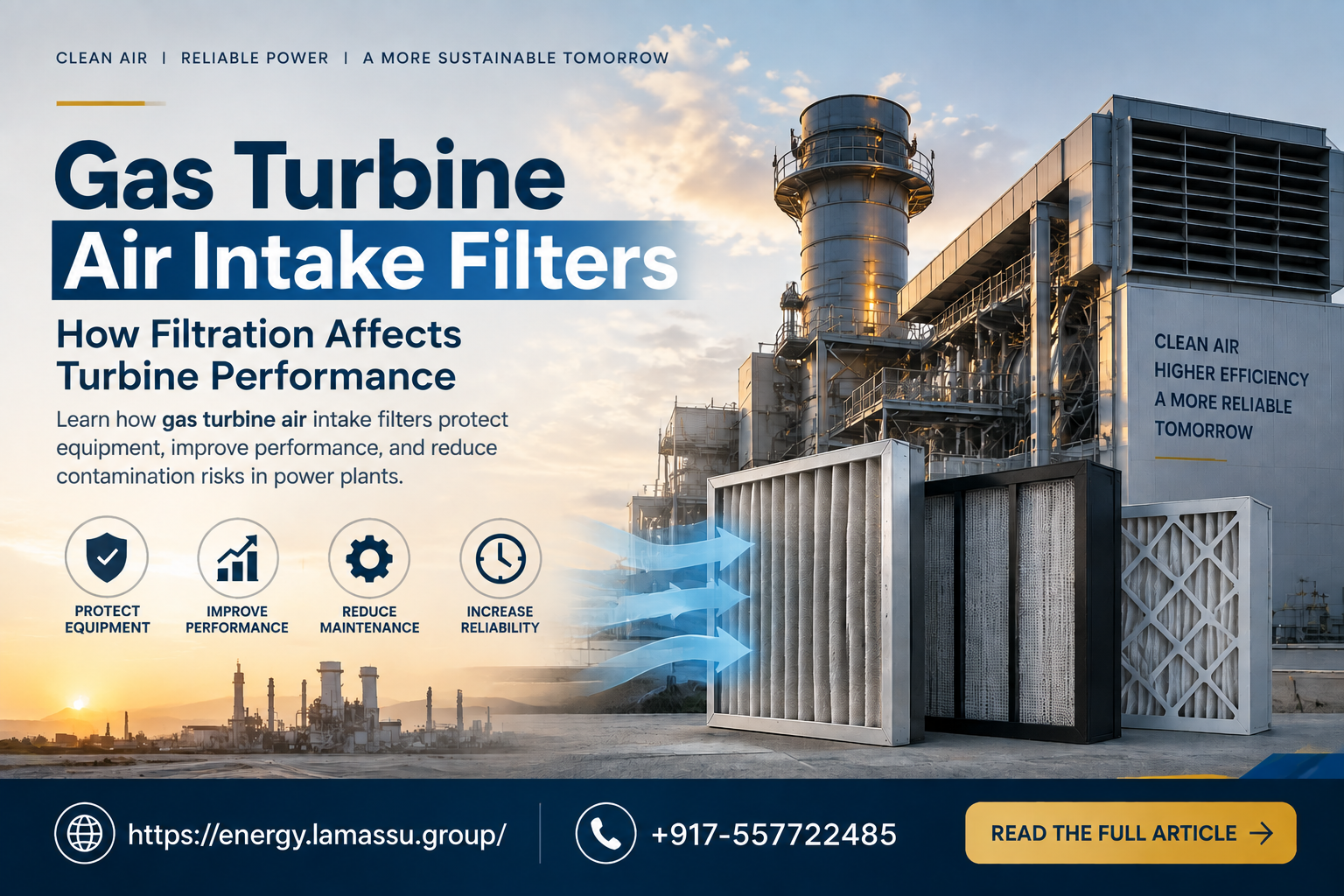
Discover how gas turbine air intake filters protect equipment, improve performance, and reduce reliability risks in demanding environments.
What Are Gas Turbine Air Intake Filters?
Gas Turbine Air Intake Filters are filtration components designed to remove airborne contaminants before air enters the gas turbine compressor. Since gas turbines require large amounts of clean air to operate efficiently, the quality of incoming air has a direct impact on equipment performance, reliability, and operating life.
During operation, gas turbines continuously draw air from the surrounding environment. This air may contain dust, sand particles, moisture, salt, and industrial contaminants that can affect internal turbine components if they are not properly filtered.
The main purpose of Gas Turbine Air Intake Filters is to protect critical turbine systems by reducing the amount of harmful particles entering the compressor section.
Effective filtration helps:
- Protect compressor blades from contamination.
- Maintain stable airflow.
- Reduce fouling risks.
- Support consistent turbine performance.
- Improve equipment reliability.
For power plants operating in challenging environments, especially areas with high temperatures, dust exposure, and industrial pollutants, selecting and maintaining the right filtration system is an important part of protecting turbine assets.
Why Are Air Intake Filters Important for Gas Turbines?
A gas turbine depends on a continuous supply of clean air to achieve efficient combustion and reliable power generation. Any reduction in air quality can gradually affect turbine performance.
When contaminated air enters the compressor, particles can accumulate on internal surfaces and change the aerodynamic characteristics of the equipment.
This may result in:
- Reduced compressor efficiency.
- Lower power output.
- Increased fuel consumption.
- Higher operating temperatures.
- Additional maintenance requirements.
The importance of Gas Turbine Filters goes beyond simply removing dust. They support the overall reliability strategy by helping protect components that operate under extreme mechanical and thermal conditions.
A well-designed Air Intake Filtration system allows facilities to control contamination levels and reduce the impact of environmental conditions on turbine operation.
How Poor Air Filtration Affects Gas Turbine Performance
Poor filtration performance does not always cause immediate equipment failure. In many cases, the impact appears gradually through reduced efficiency, increased operating requirements, and changes in equipment behavior.
Understanding these effects helps maintenance teams identify risks earlier and make better decisions.
Compressor Fouling and Performance Reduction
One of the most common effects of inadequate filtration is compressor fouling.
When dust and contaminants pass through the air intake system, they can accumulate on compressor blades and internal surfaces. This buildup can change airflow conditions and reduce compressor efficiency.
Compressor fouling may lead to:
- Lower turbine output.
- Reduced efficiency.
- Increased heat rate.
- Higher fuel consumption.
- More frequent cleaning requirements.
In regions with high dust levels, maintaining effective Gas Turbine Filtration becomes especially important because contamination can accumulate faster compared with cleaner operating environments.
Reduced Airflow and Pressure Loss
The air intake system must provide sufficient airflow with minimal restriction. When filters become overloaded or unsuitable for operating conditions, pressure losses can increase.
Higher pressure drop across filters may affect:
- Airflow availability.
- Compressor operation.
- Turbine performance.
- Overall plant efficiency.
Monitoring filter condition and pressure drop helps facilities determine when filters require attention or replacement.
Increased Maintenance Requirements
Poor air quality can increase the amount of maintenance required for turbine components.
Contamination may contribute to:
- Compressor cleaning requirements.
- Increased inspection frequency.
- Faster component degradation.
- Additional troubleshooting activities.
By controlling contamination at the air intake stage, facilities can reduce some of the challenges associated with turbine operation in demanding environments.
Types of Gas Turbine Air Intake Filters
Different filtration technologies are used depending on operating conditions, environmental exposure, and turbine requirements.
The correct filtration approach depends on factors such as:
- Dust concentration.
- Particle size.
- Humidity levels.
- Salt exposure.
- Required filtration efficiency.
- Acceptable pressure drop.
Pre Filters
Pre filters are commonly used as the first filtration stage in an air intake system.
Their main purpose is to capture larger particles before air reaches higher-efficiency filtration stages.
They can help:
- Reduce contamination load on final filters.
- Extend the service life of downstream filters.
- Improve overall filtration performance.
Fine Filters
Fine filters capture smaller particles that may pass through basic filtration stages.
They are important for applications where compressor protection and air quality control are critical.
Fine filtration can help reduce the amount of contaminants reaching sensitive turbine components.
High Efficiency Filters
High efficiency filtration systems are designed to capture smaller particles with greater effectiveness.
They are often considered in environments where contamination control is a priority and where turbine reliability is highly important.
The selection of high-efficiency filters should consider the balance between filtration performance and pressure loss.
Coalescing Filters
Coalescing filters are designed to help remove liquid aerosols and fine contaminants from incoming air.
They can be useful in environments where moisture, oil mist, or airborne liquid particles may affect turbine operation.
Gas Turbine Air Intake Filters in Hot and Dusty Environments
Gas turbines operating in hot and dusty environments face additional challenges that can affect equipment performance and reliability. Environmental conditions such as airborne dust, sand particles, humidity, and industrial pollutants can influence the quality of air entering the turbine system.
This is especially important for power generation facilities operating in regions with challenging climates, including the Middle East, where high temperatures and dust exposure can increase filtration requirements.
In these environments, an effective Gas Turbine Air Intake Filters system helps reduce contamination risks by controlling the quality of incoming air before it reaches critical turbine components.
Important factors to consider include:
- Dust concentration in the surrounding environment.
- Seasonal changes in air quality.
- Humidity and moisture levels.
- Industrial emissions.
- Required filtration efficiency.
- Filter replacement intervals.
Selecting the right filtration solution helps facilities maintain stable turbine operation while reducing the impact of environmental conditions on equipment performance.
How Air Intake Filtration Protects Gas Turbine Components
The air intake system is the first protection point between the external environment and the internal turbine components.
Without effective filtration, contaminants may reach sensitive areas such as:
- Compressor blades.
- Rotating components.
- Combustion systems.
- Cooling passages.
Over time, contamination can contribute to:
- Surface deposits.
- Reduced airflow.
- Component wear.
- Performance degradation.
By removing harmful particles before they enter the turbine, Gas Turbine Filters help protect equipment and support more reliable operation.
Filtration is therefore not only an air quality solution. It is an important part of a broader equipment protection strategy.
Signs That Gas Turbine Air Intake Filters Need Attention
Filter condition can directly influence turbine performance. Waiting until performance problems become severe may increase operational risks and maintenance requirements.
Common indicators that filtration performance may need evaluation include:
Increased Pressure Drop
A rising pressure drop across the filter system may indicate filter loading or contamination buildup.
Higher pressure losses can restrict airflow and affect turbine operation.
Reduced Turbine Output
A decline in power output without a clear operational reason may indicate airflow restrictions or compressor contamination.
Increased Fuel Consumption
When airflow quality and compressor performance are affected, the turbine may require more fuel to produce the same power output.
More Frequent Compressor Cleaning
If compressor fouling occurs more frequently, the air filtration system may require evaluation to determine whether it is providing adequate protection.
Visible Contamination
Dust accumulation, moisture exposure, or visible particles around the intake system may indicate filtration challenges.
Monitoring these indicators helps facilities identify filtration issues before they contribute to larger equipment performance problems.
How to Select the Right Gas Turbine Air Intake Filters
Choosing suitable Gas Turbine Air Intake Filters requires understanding the operating environment and turbine requirements.
The correct selection depends on several factors:
Environmental Conditions
The surrounding environment plays a major role in determining filtration requirements.
Facilities exposed to:
- Desert dust.
- Salt particles.
- High humidity.
- Industrial pollutants.
may require different filtration approaches compared with facilities operating in cleaner environments.
Filtration Efficiency
Filter efficiency determines how effectively contaminants are removed from incoming air.
However, higher efficiency should always be balanced with acceptable pressure drop to maintain proper airflow.
Pressure Drop Performance
A filter that provides excellent particle removal but creates excessive airflow resistance may negatively affect turbine performance.
Therefore, filtration selection should consider both protection and operational efficiency.
Filter Service Life
The expected operating life of filters depends on:
- Contamination levels.
- Operating hours.
- Environmental conditions.
- Filter design.
- Maintenance practices.
Understanding service life helps facilities plan replacement activities and avoid unexpected filtration issues.
The Relationship Between Gas Turbine Filters and Maintenance Strategy
Filtration plays an important role within a complete Gas Turbine Maintenance strategy.
Although filters are only one part of turbine operation, their condition can influence:
- Compressor cleanliness.
- Equipment performance.
- Maintenance requirements.
- Inspection frequency.
- Component protection.
Poor filtration can increase contamination-related problems, while effective filtration can help reduce unnecessary maintenance challenges.
For this reason, filtration should be considered during maintenance planning alongside inspection results, operating data, and equipment condition.
Gas Turbine Air Intake Filters and Turbine Reliability
Equipment reliability depends on maintaining critical components in suitable operating condition.
Gas Turbine Air Intake Filters support reliability by helping control contamination before it reaches sensitive turbine systems.
Effective filtration can contribute to:
- More stable turbine performance.
- Reduced contamination risks.
- Better component protection.
- Improved maintenance planning.
- Longer equipment service life.
When combined with monitoring and inspection practices, filtration becomes part of a complete reliability approach rather than a standalone component.
The Role of Filter Testing in Gas Turbine Performance
Selecting and installing filters is only part of maintaining effective filtration performance. Regular evaluation can help confirm whether filtration systems continue to operate according to expected requirements.
Filter Testing Services can help assess:
- Filter efficiency.
- Pressure drop performance.
- Filtration system condition.
- Overall performance changes.
Testing provides valuable information that supports maintenance decisions and helps facilities understand whether filtration systems continue to protect critical equipment effectively.
For facilities requiring professional evaluation, Lamassu Energy provides technical solutions supporting industrial filtration and power generation applications.
Gas Turbine Air Intake Filters vs Regular Industrial Air Filters
Although both solutions are designed to remove contaminants from air, gas turbine filtration requirements are typically more demanding.
Gas turbine systems require filtration solutions that consider:
- Large airflow volumes.
- Continuous operation.
- Sensitive rotating equipment.
- Strict performance requirements.
Regular industrial air filters may not always provide the level of protection required for critical power generation assets.
The correct filtration approach depends on the application, operating environment, and equipment requirements.
How Proper Filtration Helps Reduce Performance Loss
Performance degradation often develops through multiple small factors rather than a single event.
Contamination control through effective Gas Turbine Filtration can help reduce risks associated with:
- Compressor fouling.
- Airflow restrictions.
- Increased maintenance requirements.
- Reduced operating efficiency.
By protecting the air path entering the turbine, filtration supports more stable operation and helps facilities maintain expected performance levels.
About Lamassu Energy
Lamassu Energy provides specialized solutions and technical support for power generation and industrial facilities, helping organizations improve equipment reliability, protect critical assets, and maintain stable operational performance in demanding environments.
With expertise in industrial filtration, turbine air intake solutions, technical field support, and energy-sector applications, Lamassu Energy helps facilities address challenges related to contamination control, equipment protection, and operational efficiency.
For gas turbine applications, Lamassu Energy provides filtration solutions designed to support turbine protection, including air intake filters and other critical filtration systems that help maintain reliable equipment performance.
Learn more about Lamassu Energy and its power generation solutions: https://energy.lamassu.group/
Frequently Asked Questions
What are Gas Turbine Air Intake Filters?
Gas Turbine Air Intake Filters are filtration components designed to remove airborne contaminants before air enters the gas turbine compressor, helping protect equipment and maintain performance.
Why are air intake filters important for gas turbines?
Air intake filters help prevent dust and contaminants from reaching critical turbine components, reducing risks related to fouling, performance loss, and equipment degradation.
How do dirty air filters affect gas turbine performance?
Dirty or unsuitable filters can increase pressure drop, reduce airflow, contribute to compressor fouling, and affect turbine efficiency.
How often should gas turbine air intake filters be replaced?
Replacement frequency depends on operating conditions, contamination levels, filter type, environmental exposure, and manufacturer recommendations.
What types of filters are used in gas turbines?
Common types include pre filters, fine filters, high-efficiency filters, and coalescing filters depending on the application and environment.
Can air filtration improve gas turbine reliability?
Yes. Effective filtration helps protect turbine components from contamination and supports more stable operation and maintenance planning.
What is the difference between Gas Turbine Filters and Industrial Air Filters?
Gas turbine filters are designed for critical power generation applications with high airflow requirements and strict equipment protection needs.
How does filtration affect gas turbine maintenance?
Proper filtration can reduce contamination-related issues, support compressor cleanliness, and help reduce additional maintenance requirements.
Why are filtration systems important in dusty environments?
Dusty environments increase contamination risks, making effective air intake filtration important for protecting turbine components and maintaining performance.
What is the role of filter testing in gas turbine systems?
Filter testing helps evaluate efficiency, pressure drop, and filtration performance to ensure the system continues protecting critical equipment.